Stains, drips and lifted shingles around Warren
Roof Leak Repair in Warren, NJ
Roof leak repair in Warren, NJ starts by tracing where the water enters, a point that usually sits further up the slope than the stain on the ceiling.
Call (908) 827-6709, name the room that shows water and the roof's age, and the contractor can talk through what to look at first.
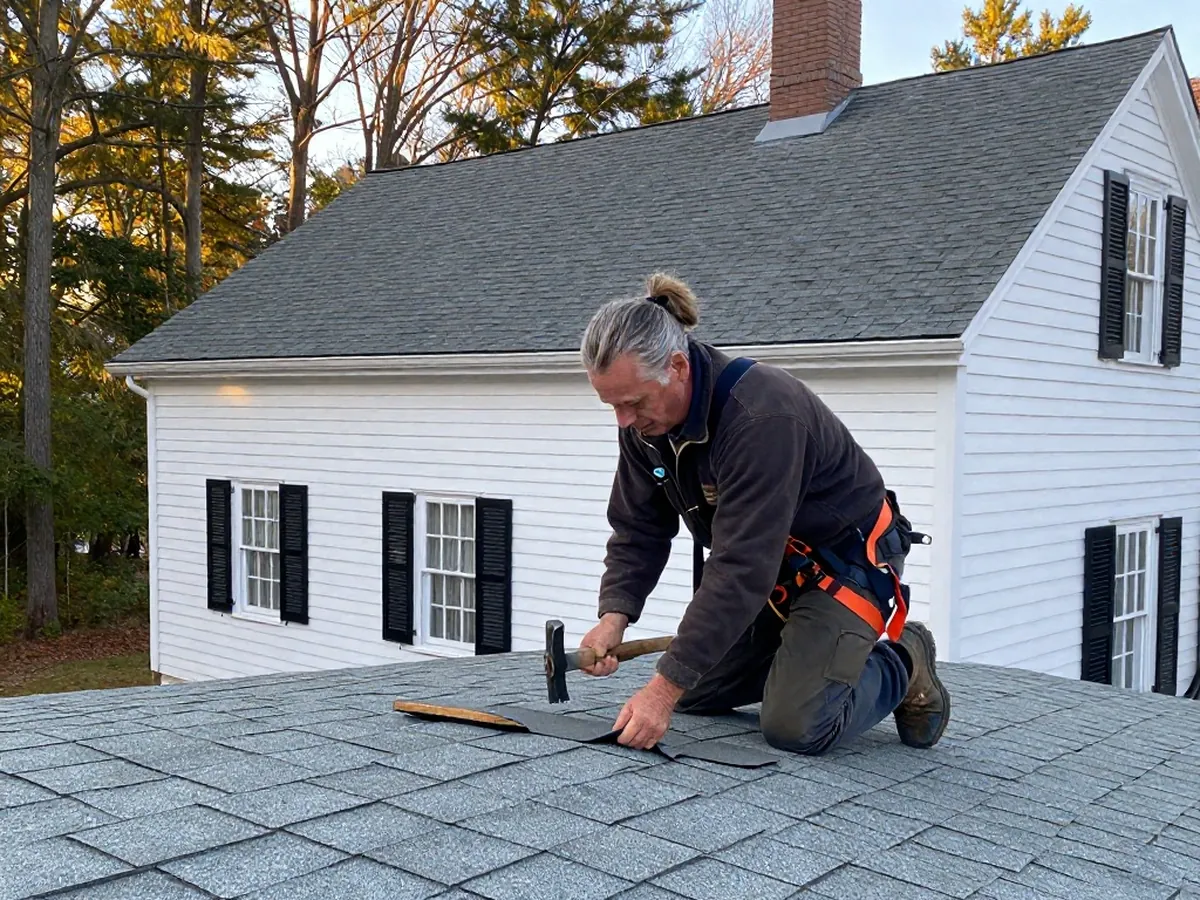
What the contractor can look at
Call (908) 827-6709, name the room that shows water and give the roof's age; the contractor can then offer a visit.
- The contractor can trace the stain up the slope and into the attic to find the opening.
- Valleys, vent pipes, chimneys and wall joints get a close look, since the Department of Energy's building science pages name valleys and roof penetrations as the most vulnerable spots.
- The boards under the shingles can be pressed for soft spots, which decide whether a patch will hold.
- Wet insulation and ceiling drywall can be checked too. The repair brief says to remove wet insulation so the ceiling can dry.
- The contractor can lay out the choices, from a few shingles to a flashing repair to a wider job, with the scope in writing.
Looks from the ground
Stick to what the lawn, an upstairs window or the attic hatch shows. A ladder, or a walk over the shingles, is a roofer's job.
- From the lawn, follow the slope above the stained room. A curled, cracked or missing shingle stands out, and so does a vent pipe or chimney that looks loose.
- Look into the attic from the top of the ladder and keep out of it. A missed step on the floor can go through the ceiling below. Dark streaks on the roof boards or damp insulation mark the water's path.
- Mark the stain's outer edge with a pencil line and note the date. After the next rain, see whether the stain has crossed the line.
- Check the foot of each downspout. A pinch of gritty sand there came off the shingles, which shed it as they wear thin.
Step back and get help if
- Water coming through a light fixture or running toward an outlet: leave the room, touch no switches and call 911 from a dry spot.
- A ceiling that bulges or keeps dripping may be holding a tubful of water. Stay out from under it, move pets out too, and call 911.
- A wire lying in the yard or draped over the gutter: assume it is live, keep 30 feet away, and let 911 or your electric company know (PSE&G 1-800-436-7734, JCP&L 1-888-544-4877).
- Rungs or shingles that are wet or frosty: do not go up. A fall is the bigger danger, and a roofer can deal with the leak later. Call 911 if someone is hurt.
Questions to put to a roofer
Questions that separate a leak repair from a guess
Ask where the water is getting in and how the roofer knows. A real answer points to a spot on the roof or in the attic, not only at the stain.
Ask whether the job is a few shingles, a flashing repair or something wider, and what sits under the shingles at that spot. Torn underlayment keeps leaking after new shingles go on.
Ask for the scope on paper, with the materials named, so the roof gets the work that was agreed on.
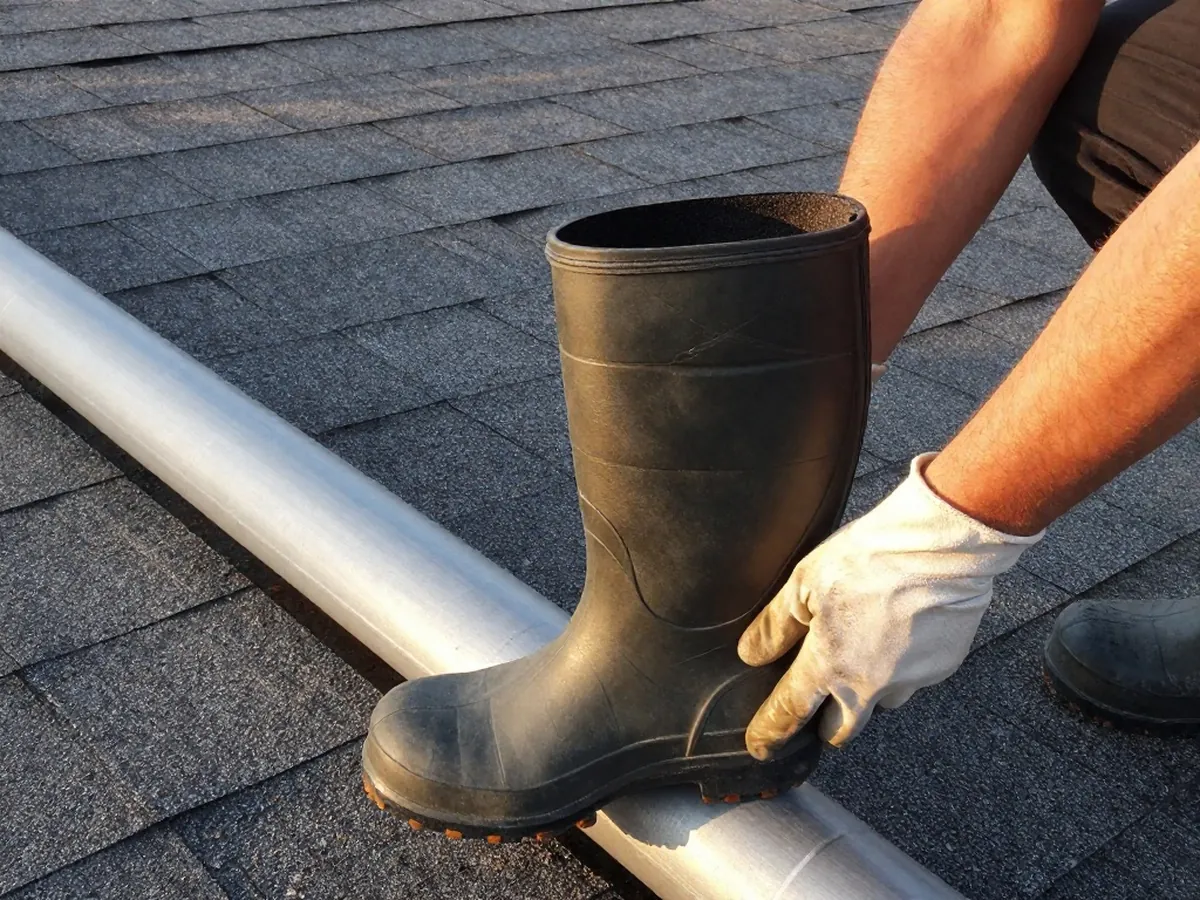
About the picture
In the picture: one shingle out, one shingle in
The scene shows the basic move behind many leak repairs. The row above the cracked shingle is lifted, the nails come out, the damaged piece slides out, and the new one goes in under the same row, nailed so the next course hides the heads.
FEMA's sloped-roof fact sheet says to use nails with ridged shanks for all wood nailing. The image is a rendered scene and does not show an actual repair.
Questions this job raises
Where does a roof leak land on a 1-to-10 scale?
Water coming through a light fixture, a ceiling that bulges or a wire down is an 8 to 10: step away and reach 911 or the utility first. A stain that widens with each rain, or a shingle gone from a slope, is a 4 to 7, so call (908) 827-6709 this week. One old stain that has stopped spreading is a 1 to 3: photograph it, watch the next rain and call if it returns.
Which parts of a roof leak most often?
The joints and openings. The Department of Energy's building science pages name valleys and roof penetrations as the most vulnerable areas, and the shingle trade group says flashings are the most vulnerable points. That is why a roofer looks at those before replacing any shingles.
What about wet insulation and drywall under the leak?
The Handy Homeowner repair brief says wet insulation has to be removed so the ceiling can dry. It adds that a ceiling soaked by nothing but clean rainwater may stay as it is, as long as the drywall is not sagging, mildewed or losing its smooth texture. A sagging patch is a safety matter, so keep clear of it.
How often does a roof need a look?
FEMA's roof fact sheets advise at least two checks a year, usually spring and fall, plus one after high winds. The shingle trade group adds that damage is better found and repaired before winter, when snow and ice load can worsen a problem nobody spotted.
Does leak repair reach Watchung, Green Brook and the other towns?
Yes. The contractor covers Warren roofing, Watchung roofing, Green Brook roofing, Bridgewater roofing, Bernards roofing and Long Hill roofing. Name your street when you call (908) 827-6709, and the area question gets a plain answer.
Parts of the roof involved
Three layers between the rain and your ceiling
Think of a rain jacket with a lining. The shingles shed most of the water. Under them, a water-resistant underlayment catches what slips through, and under that the roof deck holds everything up. Metal flashing seals the places where those layers are interrupted: chimneys, walls and vent pipes.
A leak means water got past one layer and then the next. The Department of Energy's building science pages describe peel-and-stick membrane in valleys and at wall joints, with metal flashing laid over it around chimneys and vent stacks.
Paperwork, briefly
Leak repairs and the state's paperwork line
Under New Jersey's code, mending or swapping roof covering is listed as ordinary maintenance for a detached home meant for no more than two families, which brings no permit application and no inspection; the code still governs the work itself. The state's alert does not speak to attached homes, and the six town pages do not all say the same thing. Offices are listed on the hiring checklist.
Where this comes from (7)
- U.S. Department of Energy, Handy Homeowner technical brief: Repairing Roofs and Ceilings (Jan 2006)
- Asphalt Roofing Manufacturers Association, Assessing roof damage after Superstorm Sandy (7 Nov 2012)
- U.S. Department of Energy, Building Science Education, Water-managed roof assembly
- FEMA, Fact Sheet 3.3.1: Roof Systems, Sloped Roofs (Mar 2022)
- PSE&G, Downed power lines
- FirstEnergy, Downed power lines
- NJ Department of Community Affairs, Ordinary Maintenance and Minor Work alert (5 Mar 2018)
Checked 1 Nov 2026
Have these ready
Start with the street address, the room that shows water and a guess at the roof's age, then call (908) 827-6709. Renters can pass their photos to the owner, who arranges roof work.